Showing posts with label History. Show all posts

Wednesday, August 18, 2010


I must have zoo on the brain this week.  

I haven't been to the Cincinnati Zoo in over a year, but all of my favorite Zoo Facts are about this particular zoo, so here we are.


The Cincinnati Zoo is the second oldest zoo in America, opening just 14 months after the Philadelphia Zoo, in 1875.  (If you were curious, the oldest zoo in the world is the Teirgarten Schönbrunn of Vienna, built in 1752.)  What is now the Reptile House, but was built to be the Cat House, is the oldest zoo building still standing, the last remaining building from it's opening year.  This building, along with the architectural significance of  the onion-domed elephant house, marked the Cincy Zoo for the national historic registry.  There's even a plaque nestled in the bushes outside the old building, listing it's proud achievement.

(Of course, the reason the Cincinnati Zoo became the important zoo it is today is because it was one of the first, if not THE first, zoos to do away with the confining and claustrophobic animal houses and menagerie-type exhibits in favor of the more naturally spacious "habitat" enclosures. Better for the animals, and a little bit thrilling for visitors to see them "in the wild.)   

And if you go to Cincinnati, be sure to visit Martha.  Martha, named for Martha Washington, was a passenger pigeon, the last surviving Passenger Pigeon in the world, and she died in her hut in 1914 at the ripe old age of 29.  Her home has since been transformed into a memorial aviary, complete with the history of America's brutal slaughtering of every wild Passenger Pigeon in the country.  But don't feel squeamish - Martha's not there.  Her body was immediately sent to the Smithsonian.  I understand she's no longer on display, and is in an archive...somewhere.

There are birds on display, however.  There's Incus, the last of the Carolina Parakeets, who died in this same aviary a mere four years after Martha's passing.  There are also three stuffed Passenger Pigeons, including "Buttons," the last wild pigeon, shot by an Ohio farm boy  protecting his corn.


Saturday, May 29, 2010

On The Outside, Looking In

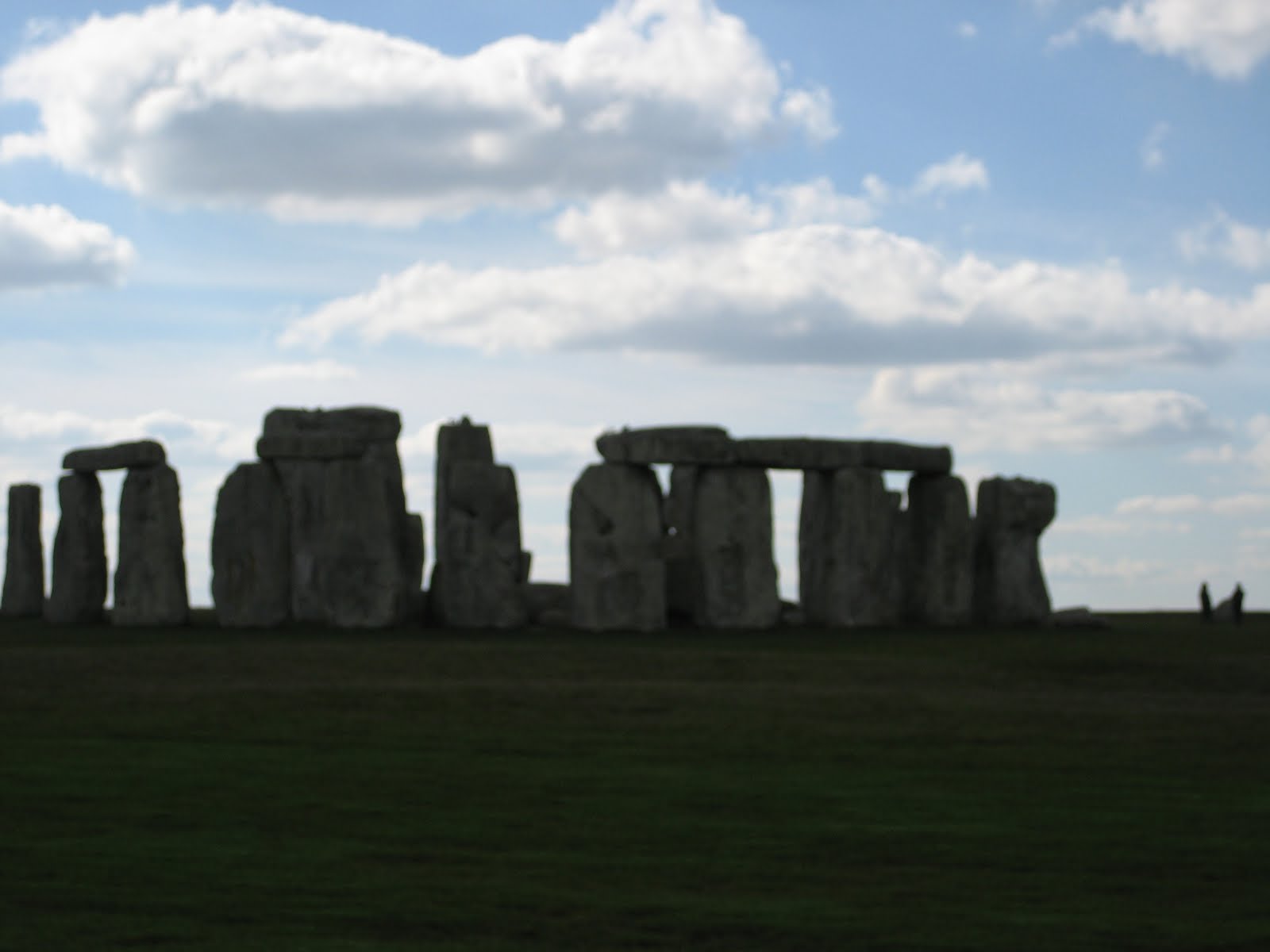
Salisbury, England.  Spring 2007.


It's just as windy here as it's been everyplace else in Salisbury.  There's a slight whistle as the air moves through the stones, blowing hard enough to pierce the fabrics of our jackets.  Sarah was the lone smarty of the group - she brought a hat.  I take my flimsy silk scarf and wrap it around my head and neck, wishing I had waited until after this trip to shave all my hair off.  Ah, well.  You live and you learn, I guess.


It doesn't look quite real.  I keep expecting the light to hit it at that special angle and it will start looking majestic, or inspire some awe.  Instead it looks like a movie set, like I could walk right up to it and knock it with my fingers and hear the dull thud of hollow fiberglass, of plaster over chicken wire.  Not that you're allowed to touch it - like so many other very old things there's absolutely no touching allowed, for it's own protection.  Nevermind that it's a great big block of rock.  Wouldn't want to get it smudgy.  (I know, I know.  Natural oils and vandalism remain the scourge of ancient history.)


(This picture always makes us laugh.  I can't not think of the "Stone Henge" scene in Spinal Tap every time I see it.)


On days when the sun shines I imagine the stones cast long shadows over the ground, maybe they'd even reach our feet standing so far away.  But it's overcast, as it has been so many other days in England, and the sun is high enough to throw short, stubby little shades close to the stone bases.  Not so impressive at mid-day, but I bet it's a remarkable sight when the sun rises and sets.


Apparently, there's a special pass you can buy for an evening tour that will let you walk in between the stones, but we're not on that ticket.  The bus is waiting for us, and we are so very grateful to get out of the wind.

Thursday, May 27, 2010

Pünk'd

Hellbrunn, Austria.  Summer 2004.


The trick is finding the place to stand. 

Hellbrunn Palace is definitive proof that people have always had a wicked sense of humor, that laughing at the harmless misfortune of others was not invented by Ashton Kutcher, that it isn't jaded modern cynicism that perfected the prank.  

The water games at Hellbrunn Palace are not the oldest jokes in the book, but they might be my favorite.  


It's an uncharacteristically hot Austrian day.  There are few trees casting shadows over the gravel pathways winding around the palace, and we are sweating.  Profusely.  Some of us gather around a fountain, dipping our fingers into the water and dripping it across our foreheads and the backs of our necks.  It's too sun-warmed to do much in the way of cooling, but that doesn't stop us.

The guide sneaks up behind us, sunglasses on her head and smiling like she knows something.  "Welcome to Hellbrunn!" she says brightly.  We groan at her enthusiasm and fan ourselves with our fingers.   

 
Our first stop is a long stone table sat in front of a reflecting pool.  The guide invites the group to come sit at the carved stone stools surrounding the table, and there's a small rush to be the first to sit down (I hang back - it's too hot to run fast).  One girl squeals when her bare thighs hit the stone.  "It's so hot!" she says, tugging the fabric of her shorts as far down as it will decently go.  Our guide describes the former Prince-Archbishop of Salzburg Markus Stittkus von Hohenems, the man who built the palace and designed its water garden.  "Visitors are only ever meant to be here during the day," she says.  "So there are no bedrooms in the palace."  Not that it matters much, she goes on to say, because Mr. Markus liked to entertain his guests outside as much as possible.  "And who could blame them?" she asks.  "Look at the beautiful view."  


And as our heads turn to look at the reflection of the palace in the in the pool, the guide drops her hand behind the column she's been resting on.  The guests at the table shriek when the water rockets up their backs, shooting up from the holes in their seats.  The rest of us throw our arms over our heads to shield ourselves from the jets of water arcing over our heads.  "Let the Water Games begin!" our guide cackles.  I bet this never gets old.   

(Allegedly, there's one spot at all of these water features that never gets wet.  Mr. Markus himself would stand in that spot, celebrating his dryness while his guests got soaked.  The tour guides stand there now - I suppose it's only fair.)

I was quick - I managed to escape the water mostly unscathed, and I've already dried in the sun. The girl from before has a dark wet line up her back, and she squeezes water from the bottom of her t-shirt.


When the guide parks us in front of the tall tower, those at the front of the pack move to stand as far away from it as possible.  I'm at the back of the herd, which leaves me among those closest to the tower.  I can't avoid getting wet this time.   The guide presses a button, and we all flinch instinctively.  To our surprise, there's no water.  Music plays as the little men and women positioned in and around the tower twist and turn.  It would be beautiful, charming even, if it weren't for the fact that one of those cute little figures is ten seconds away from squirting me in the eye.

When the tiny figure at the top of the tower begins to spin, we grit our teeth and grasp hands, bracing ourselves.  It's coming, and we know it's coming, and our eyes are fixed on that tiny statue, just waiting for it to squirt water out of it's mouth.  

There's a shriek from the back of the group, and a quiet panicked stampede to get away from the water coming up from the ground behind them.  There's a lot of Wet Butt at the back of the group, which serves them right for being such smarty-pants at the beginning.  I'm a little damp around the ankles, but I'm much better off than the rest.  I've won out this time, but now I have no idea where to stand as we follow the guide to the next attraction, shoes squelching all the way.  


Those aren't all the tricks Mr. Markus and Hellbrunn have up their sleeves, but I'm not going to tell you about them.  You're going to visit the palace some day, and I doing want to ruin the punch line.


Monday, May 24, 2010

Rome, Italy.  Summer 2004.


Little pomp and almost no circumstance.  It just appears there, along side the road.  Not that it needs a formal introduction - it's the colosseum.  It's one of the most recognizable structures in the world, and on our first day in Rome, we're going to step inside it.  


As our group waits at the gate for our guide, Ashley sits on a large boulder near the entrance.  Only it's not a boulder.  It's too smooth on one side, and too intricately carved on the other.

"Ashley, do you realize what you're doing?"  

"What?"

"You're sitting on history.  The colosseum is under your butt."  She rockets up onto her feet, and we both burst into giggles, because it's just a piece of stone.  It's old and broken and just lying there beside the walkway.  It's not on a pedestal in a museum behind a line of velvet rope.  It's not like we were doing anything naughty.  But the weight of its history makes is something sort of sacred; this is one of the icons of the most powerful empire ever to exist.  Surely we can do more than sit on it.


Ashley surreptitiously presses her palm against an upright column.  "Quick," she whispers.  "Take a picture!"  I do, and we quickly step away from the wall, trying to look nonchalant and failing as we laugh at our own stupid joke.   


The building isn't quite a shadow of what it once was.  It's still standing, it's still mostly intact, but there's something intimidating about the way the light moves through its open spaces.  The flowers growing in the cracks and crevasses of the stone do nothing to soften its look.  It makes me think of that Bodies exhibit that everyone's been talking about but that I've never had the guts to seek out for myself.  Innards carefully reconstructed and posed and displayed, nothing that isn't human, but deeply unsettling without the skin.  That's how the colosseum looks.  Flayed.  

Or maybe it feels like stepping onto a stage when the lights are off and the set's been taken down.  Maybe this is empty theatre. 


The guide rattles off dimensions and dates and names - the building is so ubiquitous though, that there's little she's saying that we haven't already heard before.  Yes, we know the entertainment held here was as much theatre and art as it was brutality.  Yes, we know they could and would flood the arena floor and sail ships here.  Yes, we know the Ridley Scott movie is largely based on fiction.  Our guide is funny and personable, but she must be tired of climbing into this behemoth every day to tell stories to half-interested American school-children.


Our guide points to the hypoeum down below, and doesn't even blink when she describes the sophisticated mechanisms that would release wild beasts into the arena with trained gladiators or defenseless Christians.  The devices used to flood the colosseum are long gone, but we squint at the maze below our feet and try to imagine full sized ships battling for the amusement of the masses. 


Our guide points to the tall cross throwing shadows across the ground.  In 1749, Pope Benedict XIV decreed the colosseum a sacred site, in honor of the innocent Christian blood spilt here.  The Christian church has had a hand in the preservation and legacy of the building since the 16th century, when Pope Sixtus V planned to turn it into a wool factory, hoping to provide honorable work for the city's prostitutes.  (This plan never made it past the planning stage, as Sixtus died before he could put in into effect.  But what a thing it would have been.)  


Perhaps most ironically, this place where so many were put to their deaths has become the symbol for the international campaign against capital punishment.  Now, our guide tells us, when a death-row inmate earns a stay of execution, or a government abolishes the death penalty, the lights used to illuminate the building at night shine gold instead of the usual white.


The sun shines above us, but the stone is cold under my hands.  It's full of early morning tourists, but still feels cavernous and empty.  For a handful of bills you can get your picture taken out front with a man in a plastic centurion costume.  It feels both wildly inappropriate and totally appropriate at the same time.  This is theatre, after all.   

Saturday, May 15, 2010

Grab Your Things, I've Come to Take You Home

Salisbury, England.  Spring 2007.

And other such assorted sights at Salisbury Plain, with special attention to Old Sarum.


Not Pictured: Chalk Horse.  But trust me - it was there, and it was great.

Tuesday, May 11, 2010

Chateau de Versailles

Versailles, France.  Summer 2004.


I haven't spent much time in palaces - there aren't a whole lot of them in the Midwest.  There was a girl in my second and third-grade classes whose father was a doctor, and every year she'd invite all of us to her family's estate for her birthday, or halloween, or some other occasion that called for a lot of people to be around to fill up all that space.  It was the largest house I had ever been in at age eight, and the only real reference I have when they tell us we're going to the Palace at Versailles.  

(Not a good reference, I know, but when you need a step up to reach the bathroom sink, any house with a wing is practically Cinderella's Castle.)   


I don't know much about Versailles before I get there - I know it's tied to one of the Louis', and I know that the Hall of Mirrors is supposed to be really impressive.  They set us loose with the promise to be back at the bus in three hours, and that's the place I want to get to first.  I walk in circles for ten minutes looking for the Hall of Mirrors before realizing that I'm standing in the middle of it.  They're restoring it - all the glass has been covered.

It's just massive.  I try to imagine someone living here, but it's so full of tourists and so presentational and so devoid of personality that it's hard to believe this sprawling, opulent building was ever someone's home.  Did Marie-Therese sigh with relief at the sight of it on the horizon when returning from a long stay away?  Did Louis XVI find comfort in the smell of his bed sheets after a long day of being the most important man in France?  How many members of the royal family (and the servants who tended to them) knew every inch of this building, and found every inch of it refreshingly familiar? 

 
Walking through the gardens, I can't imagine living in a place this large.  I know it's supposed to be self-contained for the royals, and I know that size is imperative when it comes to impressing foreign dignitaries.  But how easy it must be to loose yourself in all that space, how lonely to live in a place that wasn't ever really designed for you to live in, but to display the pride and riches of your country.  It's beautiful, to be sure.  But I wouldn't want to live here.


Saturday, May 1, 2010

Mauthausen


This is the day we've all been dreading.  It's one thing to read about Nazi Germany in our history books, to read excerpts from testimonials coupled with the tamest pictures the publishers could find.  It's one thing to know it.  It's another thing entirely to stand on the grounds, surrounded by cold stone barracks, and know that thousands died in this place for no good reason.


The grounds stretch out in front of us, vast, and impossibly still.  There's so much space.  I think back to those pictures in my history books, the ones where stick-thin ghosts are pressed tightly together with barely enough room to breath.  The empty barracks remind me of summer camp.  It's hard to reconcile the two images.


There isn't an inch of this place that hasn't been turned into a memorial.  The walls in the rooms stilled labeled "Showers" are covered in graffiti - hundreds of messages left in dozens of languages, all asking for the same things.  Peace.  Remembrance.  Begging future generations to not let this ever happen again.  The ovens in the crematorium are overflowing with flowers, ribbons, and cards, and in the grass around the buildings there has grown a monument garden, statues for every nation, religion, and political affiliation the Nazis attempted to quietly remove from the world.  


Strangely, the museum affects us more than the actual camp.  I wonder if everyone else is having the same problem as I am - the calm of the grounds masking the unspeakable tragedy.  The air doesn't even move between the buildings.  Maybe nature is trying to be respectful, but it just makes me anxious.  


The museum tells us that most of the people sent to Mauthausen were what the called the "intellgentsia", educated persons from higher social classes - teachers, artists, socialists.  Unlike Auschwitz or Treblinka, camps that specialized in instant extermination, Mauthausen practiced "Extermination through Labor."  They worked their prisoners to death.


The museum is full of pictures, the ones the publishers never put in our high school history books.  Bodies stacked high, waiting to be burned.  Men and women so thin you can't tell them apart standing naked outside the barracks.  Piles of personal belongings - glasses, scarves, watches, wallets.  There weren't many children sent to this particular camp, but in the corner of one photograph is a small pile of stuffed toys.  


There is one picture of the prisoners standing in line for roll call.  I can look out window and identify the building they are standing in front of, but it still doesn't feel quite real.  Maybe it's shame - I feel slightly dirty standing in this place, gawking at the aftermath of this tragedy, like because I don't have any relatives who were killed in the Holocaust (or like one girl in our group, relatives who did the killing) I don't deserve to be here.  But I'm shaken, like the rest of them.  I can't wait to leave.


Thursday, April 15, 2010

Here Starts the Better Roads Movement...


Bellefontaine, Ohio is a small town like most small towns.  With a population just over 13,000, weathered brick store fronts lining each side of Main Street, and the bell tower of the Logan Country Courthouse standing tall over the surrounding buildings, Bellefontaine calls itself Bell Fountain and wears its history with pride.  It seems on every corner you can find a plaque, a marker saying, "Something important happened, and it happened here."


It's easy to miss markers like that.  The font is too small and you're driving too fast, and that thing so important flies past you before you even realize there was History there.  But there's a marker in Bellefontaine you couldn't miss, even if you tried.  It's the oldest concrete street in America, and it's this small town's star attraction.


Maybe it surprises you that the oldest concrete street in the country is in Ohio.  I know it surprised me.  If you had asked me I would have said New York City, or maybe Boston - somewhere in New England where the industrial revolution was really kicking.  And maybe if George Bartholomew, inventor of cement paving, had established his paving company in a more expected area, I would have been right.  But the Buckeye Portland Cement Company could not have lived anywhere but Ohio, and in 1889 Bartholomew came to the people of Bellefontaine and promised to build them a better road.


Not that it was an easy get.  Bartholomew had to commit to donating all of the materials needed to produce the road, and had to promise to pay up to $5,000 in repairs were the road damaged in some way.  This was at least a decade before the first automobile drive, so the road would only be open to foot traffic and horse and buggy, but considering that $5,000 in 1889 is practically Oprah money, that should speak to how little faith the people of Bellefontaine had in this newfangled cement road idea.

But George knew.  And in 1891 Court Avenue became the first concrete street in the country.  With the town impressed by the quality, the surrounding roads were quickly paved with concrete, and as news of these amazing new streets spread, so did Bartholomew's reach.  Now, over a century later, most of George's first streets have been covered over, refinished with asphalt.  But Court Avenue remains.  And in the shadow of the Logan County Courthouse, a statue of George Bartholomew stands proud before his legacy.  


Looking down at the pavement beneath my feet, I can see where the years are beginning to show, where the thousands of feet and hooves and wheels have left their marks, though the paving is still holding strong.  I wonder what it felt like, what it must have meant to be a part of something that was so revolutionary in such a quietly significant way, to unknowingly give permission to the transportation industry to be something bigger, something better.  Something more.  

Concrete roads.  I wonder if he knew.


Learn more about the city of Bellefontaine at their website.
HTML hit counter - Quick-counter.net