Showing posts with label Uganda. Show all posts

Wednesday, July 14, 2010

In The Shadows When I Come And Sing To You

You can pretend you've never done it, but we all know the truth.

It's a distinctly touristy thing to forget to turn off your camera.  And the best part is, you don't even realize it until way after, after you've come back home, and Aunt Susie drops by for a visit and you decide the thing she wants most in the world is to watch the video of your trip to St. Tropez.  And things are going great, until you're halfway through and suddenly there's fifteen minutes of your feet in the sand that you don't remember filming.

Sound familiar?  I thought so.  Don't feel too bad, though.  I mean, yes, I laughed when my folks came back from Hawai'i with footage of the floor of the Bishop Museum, but that doesn't mean I've never done it myself.  The only difference is, now I do it on purpose.


Not the first time.  The first time was definitely a proper accident. Knocked my finger against the record button while stomping through Rome and ended up with a short series of pictures of my shadow on the cobblestones.


Sure, I was embarrassed when I first discovered them, but I kind of like the effect.  Now I do it whenever I remember to.


Here I am with my sister at the top of the Punch Bowl in Oahu, Hawai'i.  


Here I am in Uganda, with my cousin Malia.  It's a bit of a cheat, since we're sort of in the picture, but try getting a toddler to stand still for anything.

Here I am with my sister again, in the courtyard of Salisbury Cathedral.  It was spring break, but FREEZING (C'mon England, be more temperate!), which is why we look that size.  But look!  You can see the outline of my shaved head!


And here I am at the Tower of London.  I've left it on its side so it doesn't look staged, but between you and me?  Totally staged.  And when I stand it upright, it looks a bit too much like the cover of a penny dreadful, what with all the trench coats and cobblestones.

Someday, this will make the best vacation slideshow ever.


Saturday, May 22, 2010

Close Up

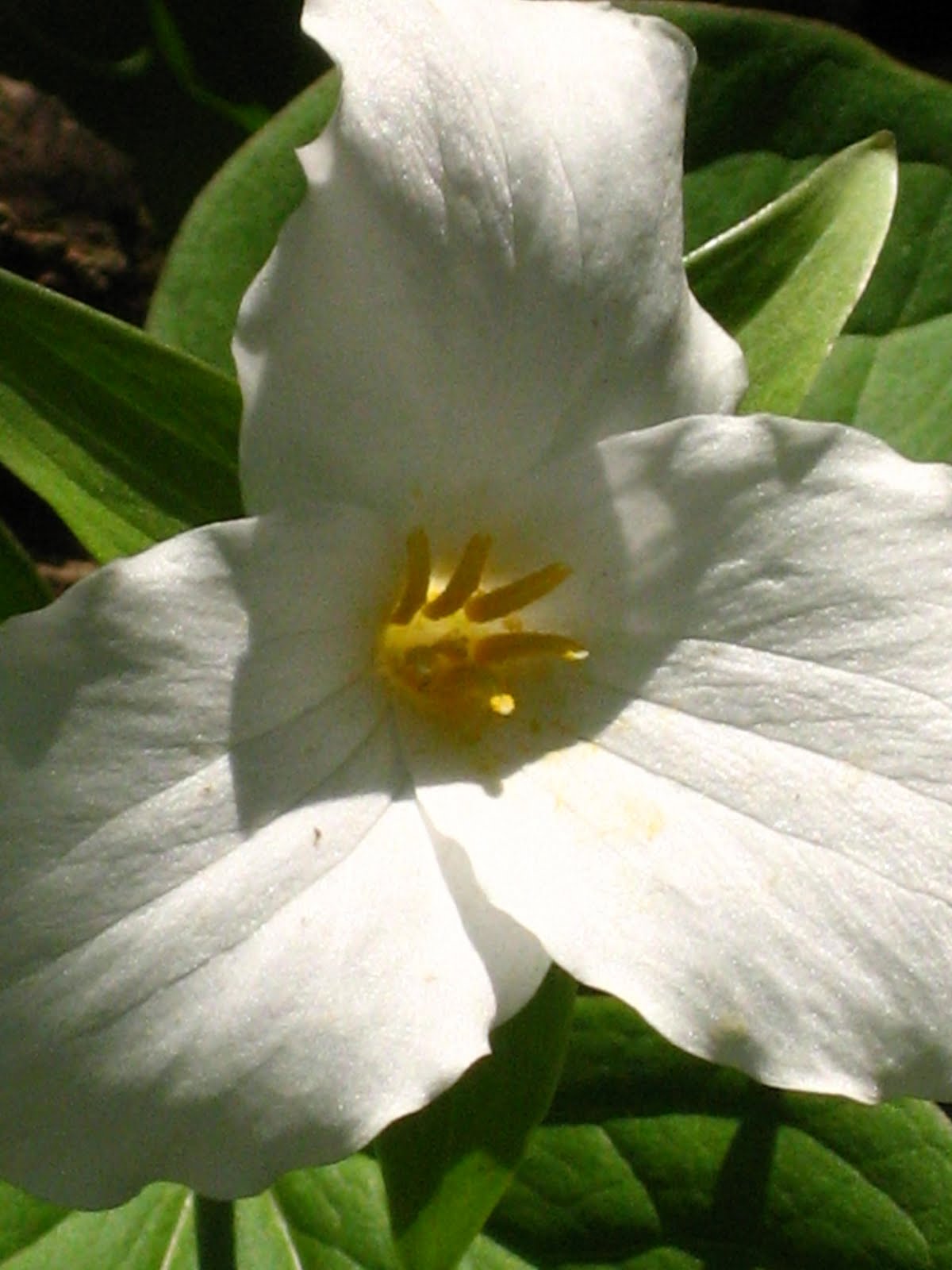
Because the best way to photograph a plant is from thiiiiiiis close.

From John Bryan State Park:


From Jinja:


From Hawai'i:


Wednesday, May 19, 2010

At the Baby Cottage

Jinja, Uganda.  Fall 2009.


There's an outbreak of scabies when I get to the Amani Baby Cottage, so I don't spend any time around the children at the orphanage.  If I were one of the volunteers, or were staying longer than two weeks, the separation might not be necessary.  But we don't want to risk me taking anything nasty home with me, so I try to keep a bit of distance as Judy shows me around the grounds.  

 
One little boy grabs hold of my legs the second I walk through the door, and reaches for me until I pick him up.  His little hands cling tight to my arms, almost enough to hurt, and he screams when I try to set him down.  "They're starved for attention," Judy tells me later, after another American volunteer has pried his fingers away and we've left him wailing with the other children.  "They've been abandoned by so many people, and there just aren't enough volunteers to make sure they all get the same amount of affection.  And they don't really need volunteers.  They need parents."  And for many of the Amani babies, time is running out.  The baby cottage will only house the children until they reach the age of five, when they're sent to a different facility.  The sad fact is, if they haven't been adopted by that time, they likely never will.  The process of adopting one of these children can take years, depending on who you are and where you live.  Some families just can't wait that long.


An older boy runs towards us as Judy leads me to her office.  "Auntie!  Auntie!" he calls, then stops short when he doesn't recognize my face.  Judy shoos him away, warning him that it's nap time, and he should be in his bed.  He hurries into a nearby building.  I hadn't noticed it before, but the gentle sounds of English lullabies are drifting through the open windows, clashing with the festive music coming from our neighbors on the other side of the fence.


None of this seems to bother the dog, who lazes in the sun outside Judy's open door.  When she gets overheated, she'll climb up to rest her belly on the cool stone floor of the office.  "No, no, no," warns Malia from my lap.  She toddles down to put her tiny hands against the dog's backside, shaking until the dog wuffles her disappointment, and goes to seek solace in the shade cast by the nursery. 


A storm knocked around most of the transformers in Jinja just a few days into my visit, so electricity is sporadic at best.  Judy can't work without a powered computer and internet connection, so we only ever stay as long as the lights are on, and walk back home when she's finished with her daily tasks, or the lights flicker off again, whichever comes first.  It's irregular, and it would make me want to tear my hair out, but Judy's been here long enough to know to brush it off with a shrug of her shoulders.  "That's just how it is here," she says, packing her bags to the sound of her equipment rapidly cooling after the power suddenly drops out for a second time that day, and I don't think I'll ever complain about a thunderstorm power outage again.


Sunday, May 16, 2010

Tongolo 3/Galema

Tongolo, Uganda.  Fall 2009.

Elizabeth says we need to go up the mountain to Galema before we go back home.  The wife of the village's LC has a lump on her leg that he wants Elizabeth to look at.  There's really nothing she can do if it's anything more than a bruised bump, but the people here trust her.  If she tells them to go down to the doctors at the aid station, they will.  

She says it's an hour walk from Tongolo to Galema, and Elizabeth is fully prepared to hike up the mountain.  The rest of us, less so.  Malia is sound asleep in her baby sling across Judy's back - I wish I were that small.  It's late in the afternoon, but the sun is still high enough to burn mercilessly.  It sounds silly to say so; It's Africa, I knew it would be hot, but I never thought it would be so relentless.  I've got a hat and plenty of sunscreen, and I can still feel the skin on my nose burning pink.


Lillian reminds Elizabeth that we have to walk past the car to get to the path to Galema, and we do have a baby with us, after all.  Elizabeth wants to resist, I can see in her eyes she doesn't want to drive up the mountain.  I don't say anything.  None of us do - we are very obviously not complaining in this battle of the wills, and if Judy points the baby in Elizabeth's direction, it's totally coincidental.  

Five minutes into the drive up the mountain, I can see why Elizabeth wanted to walk.  I can't say definitively that this is the worst road in Uganda, but it is without a doubt the worst road I've ever been on.  The dirt has almost completely eroded away, leaving deep crevasses on either side.  The bit of drivable road left is only just barely wide enough for the car - in most places we're driving half on the road, half in the crevasse, with both hands pressed against the ceiling, trying to keep our balance, wincing when a big bump knocks our elbows together. 


At the top of the hill, Elizabeth and Lillian cheerfully greet the LC, then disappear into his home to examine his wife, leaving Judy and I to stand by the car and admire the view.  Lake Victoria rests at the bottom of the mountain, the Victoria Nile stretching out like an arm into the horizon.  Children from around the village who came running at the sound of the car stop short when they see us - we are clearly not who they expected.  Some of them run away when I wave, the others just stare.  Not in a hostile way, but not in a purely curious way, either.  I try not to stare back, but I know that I am.


When Elizabeth emerges from the hut with Lillian and the LC she is smiling, but it's tight across her face, and I can tell she doesn't mean it.  The lump must be more than your average bruise.  The children flock to her with their hands outstretched, crying "Sweetie!  Sweetie!"  Elizabeth shoos them away, finally turning out her empty pockets to prove she hasn't brought any candy, and she becomes infinitely less interesting in their eyes.  Though they do still crowd around the car to hang off the doors when we're all ready to leave, and won't let go until she leans on the horn.  They run off, delighted.    

If I thought driving up the mountain was stressful, sending the car back down half-cocked with gravity pushing us faster should have killed me.  Driving out of the village is like a sigh.  We roll the windows down to let the air run through us, cooling the sweat on our skin.  The sun won't set for another three hours, but all I want to is crawl into bed and sleep for days.  Gently, though; I'm lucky to be unburned, but I'm still pretty pink around the edges enough to know that tonight will be an uncomfortable one.  

We still wave at the children who run along beside the car, but our smiles are tired and our hands are heavy.  The happy cries of "Mzungu!  Bye!" follow us all the way back to town.


Post Script:  Two days ago, after several long, uncertain months full of suddenly appearing family members, lost money, and disappearing judges, Judy contacted all of us with the news that she was officially Malia's legal guardian!  She hopes to return to America soon, where she will be able to complete the adoption process.

Friday, April 30, 2010

Sunset at Bujagali Falls


Did you know that the source of the Nile is in Uganda?  In the southeast corner of Uganda is Lake Victoria, and that's where the Nile begins (officialy, it's the Victorian Nile, part of what is called the White Nile, until it reaches Kahrtoum, in Sudan.  Then it's just the Nile).  It's strange to think about, because everything I know about the Nile involves papyrus and pyramids, and it's hard to imagine it anywhere outside of Egyptian culture.  Which is silly - it's the longest river in the world.  Obviously it can't be contained to the history of one country.


The sun is setting when we drive up to Bujagali Falls.  It's an interesting effect - look one way, and the sky is as blue as it was this afternoon.  Look the other, and the sky is alight with reds, yellows, and oranges.  It's to late for anyone to be on the river, but coming here we passed many signs saying "Nile Expedition!  Raft Bujagali!"  Maybe some other time.


There are no barriers between us as the water, just a single sign warning us not to get too close.  The only thing keeping us from being swept away is our own good sense.  I find that a lot in Uganda, the reliance on human instinct and the ability to know better.  You don't see much of that in America - even the tamest of rivers in our state parks have trails and signs directing away from the water's edge.  It's so safe now.  Like a license to act recklessly.  Not here, though.  I stand as close as I dare, and watch the water rush past my feet.


When the sun sets the warmth of the day goes with it, and we are all very hungry.  We say goodbye to Bujagali Falls. 


Monday, April 26, 2010

Tongolo, Part Two


The meeting happens without me.  I'm not bothered - it's not really my meeting, anyway.  Malia sits in my lap and eats roasted corn off the cob while Judy, Elizabeth, and Lillian present their case to the chief.  They have to prove that Malia is better in Judy's care before the chief will agree to help them, and while they've brought a "before" picture, but it's not the definitive proof they were hoping it would be.  The little girl in my lap does not look at all like the little girl in the photograph.  That girl's little shoulders are hunched from scoliosis, and her little belly is distended from hunger, and her skin is drawn tight across her bones.  The girl in my lap has a straight back, and her little belly sticks out because it's full of food, and her arms and legs are the opposite of stick-thin.  The chief points to the girl in the picture and says, "How do I know that this is not a picture of some other child?"  But when Judy points to the matching scars, he says, "I will sign your papers."


There are other signatures needed, signatures only a chief can get, so we leave the meeting with the chief's cell phone number and a promise to return next week.

Elizabeth tells us that we must go to Tongolo B - there is a woman there with a sick son, and while Elizabeth is no doctor, she knows enough about various symptoms to advise.  She says it'll be a bit of a trek.  I'm glad I wore good shoes.  I wish I had brought more sunscreen.


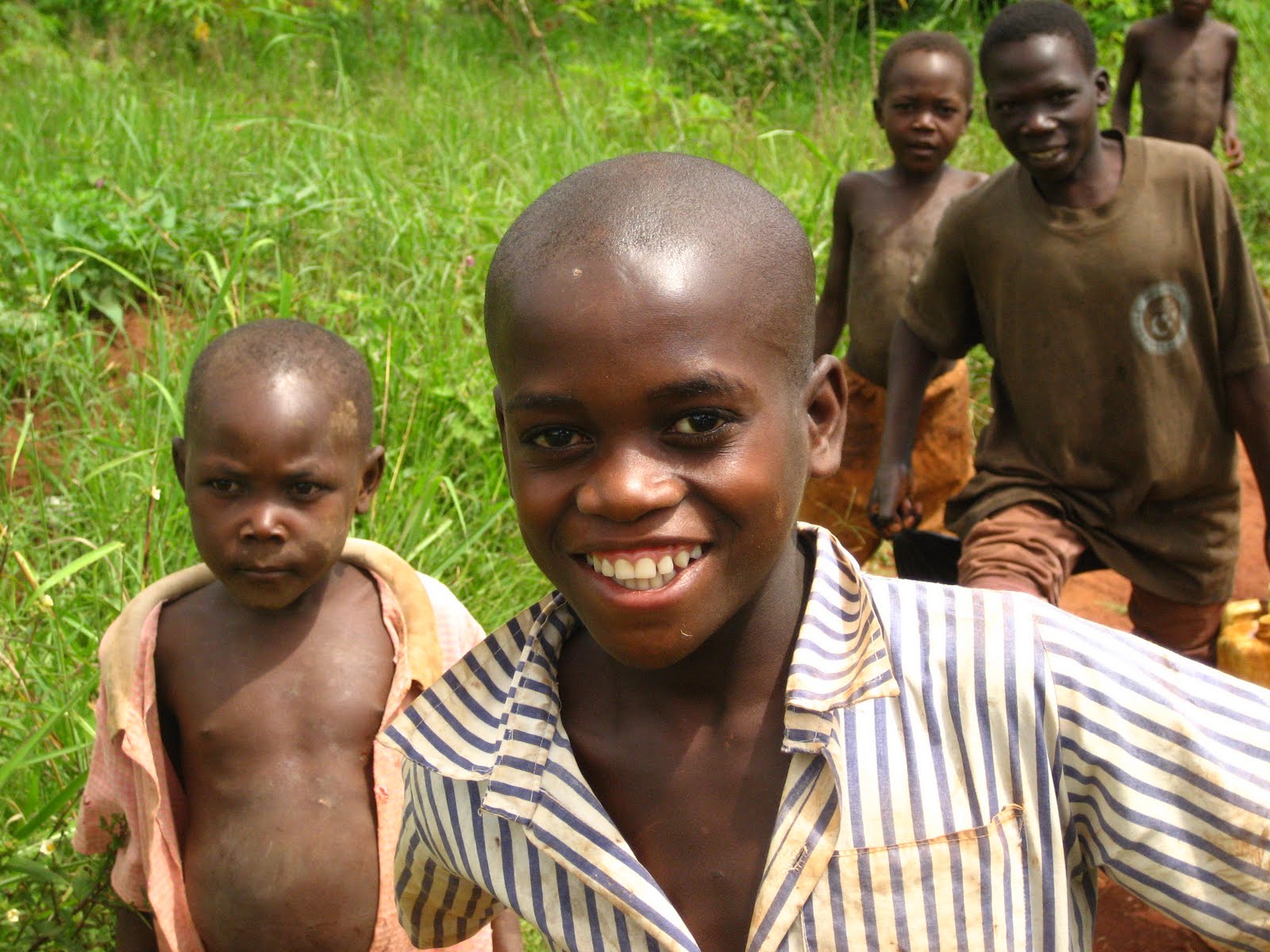
We have to cross a stream to get to Tongolo B.  A small group of boys are there filling up their jerrycans, and they wave at us as we go by.  They end up behind us, laughing with each other in Lugandan.  I turn to the boy behind me.

"May I take your picture?"  He sets down his jerrycan and smiles brightly.


I turn my camera around to show him, and the boys all gather to see how good he looks in pictures.  

When we reach Tongolo B, a woman comes running out of her hut, waving excitedly.  She wants to show Elizabeth the squash she's grown.  It's a large squash, and she's proud of it, but a bit confused as well - she's never seen a squash before, and doesn't know what to do with it.  She tries to gift it to Elizabeth, who refuses.  "You can sell it to me, if you want," she tells the woman, "but I'm going to give it back to you."  Both women seem satisfied with that.

"I keep telling them to not give me their food," she says when we start walking again.  "They might be ignoring me."


The boy in Tongolo B has Malaria.  Elizabeth tells his mother that it's absolutely treatable, but she must bring him down to the clinic as soon as possible, and they will give her the medicine she needs.  The woman agrees, but Elizabeth tells her again, just to be sure.

Walking back to the car I spy a little girl watching us from a hill.  I wave at her.  She runs away.

Friday, April 23, 2010

Tongolo, Part One


Today we go to Tongolo, the part of Africa you would expect to find in a National Geographic spread.  My Aunt Judy must go to this village to appeal to the chief, hoping that he will fill out the paperwork she needs to begin the process of adopting her daughter, Malia.  Normally these papers are signed by the child's parents, but Malia's mother and father are no longer around.  They aren't dead, just "away," - there's the unspoken understanding that the people of Tongolo know exactly where the child's parents are, and are keeping quiet for their protection.  Abandoning a child is illegal, and if either parent is found, they would absolutely be jailed for it.  There is a man who claims to be an uncle in the village, and we will need his signature as well.


We drive to the village on what must be the second worst road in Uganda*.  It's a holiday, a holy day, and the villagers we pass are dressed in their finest, walking to and from their worshiping places.  "Most of the children in the villages have never seen a white person," I am told before we leave, "so they will either run away from you, or they'll run at you and ask you for something."  None of the children have run away, yet.  They run alongside the road in their dresses and slacks, smiling and hollering and waving at our car.  One little girl wears a red dress two sizes too big, and she can hardly contain herself when she sees our car.  She can't be older than four or five, and she runs the way a child does; she's so excited she can only just control her limbs, and she's picking her knees up higher as if that will make her go faster.  She waves her arms as hard as she can as she cries, "Mzungu!  Jambo!"  Mzungu meaning "white person," Jambo meaning "hello."


(A note about Ugandan roads and traffic from an American perspective.  In theory, they drive on the left.  In reality, the dirt roads have been so damaged by pot holes and erosion that they drive on whatever side is going to do the least amount of damage to the undercarriage of their cars.  Sometimes that's the left side, sometimes that's the right, and sometimes that 's right down the middle, oncoming traffic be damned.  The more metropolitan areas may be in better condition, but are no safer to drive on.  Traffic laws are little more than courteous suggestions, and there's no right-of-way privilege for pedestrians or cyclists, just the assumption that they know better than to get hit by a car.  But I didn't see or hear of a single accident in the time I was there, so they must have found a method to the madness.)     


We've been led to the village by Elizabeth, the woman who found Malia and placed her into my aunt's care.  Elizabeth acts as a social worker for Tongolo and the surrounding villages, an America woman who's made it her job to help floundering villages prosper.  Her visit today has two purposes - to join our visit with the chief, and check in on the progress of her work.  She's been showing the villagers how to plant and care for personal and communal gardens, teaching them to grow vegetables that they can either eat or take down to the market to sell.


Elizabeth speaks little Lugandan, and the villagers speak little English, so her friend and co-worker Lillian has come with us, and when the villagers come to see us, she makes the introductions.  I say they came to see us, but really, they came to see Malia, and some can hardly believe their eyes.  How different she must look from the little girl with stick-thin legs and the crooked back who left them only months ago.  Now she looks healthy, and happy, and most importantly, loved.  And when I say everyone comes, I mean everyone comes.  Mothers, children, men who may or may not be uncles, and they all touch her face and hold her hands and try to make her smile, and I think, "Where was this warmth when she was thrown to the street and you heard her cry?" 


Some of the houses are square and made of brick, some of the houses are round and made of mud. Some have painted pictures on the outer walls, telling you who lives there with some decorative flair. We saw at least one herd of cattle (I still don't know if we saw more than one herd, or the same herd more than once), many people had goats (and some baby goats) tied up outside of their homes.  My aunt and I have taken Malia down the hill a ways to see where the pigs are kept, two huge, muddy beasts fighting for shade under the trees.  There is an engine roar above us, and one of the might-be-an-uncles calls us back up the hill.  The chief has just arrived on his motorcycle, and now it is time to talk.   


Tuesday, April 20, 2010

Faces


Just a small collection of faces and heads.  These faces come from various locations in France, Austria, Switzerland, Italy, England, and Uganda.


HTML hit counter - Quick-counter.net